Free, honest help for St. Lucie County property owners facing tax or mortgage foreclosure — plus how to claim surplus funds you may be owed after a sale. House or land, keep it or sell it. No pressure, no fees.
Call or text — free, no pressure1-833-2-OPTIONS6 7 8 4 6 6 7Tell us a little about your situation. We'll send a clear, no-pressure breakdown of every option available to you in St. Lucie County.
There's rarely just one answer. Here are the real options St. Lucie County property owners have — including the ones that don't involve us at all.
House, land, or commercial — the process differs, and so does the surplus. We cover all three here, in St. Lucie County and across Florida.
Mortgage foreclosure on a home in Fort Pierce or nearby — your rights, the Circuit Court timeline, and how to keep it or sell before the sale.
Vacant lot or acreage behind on taxes? Tax-deed foreclosure on St. Lucie land works differently — and surplus funds are common here.
Storefront, office, or multi-unit in trouble? Your options for commercial property in St. Lucie County, including a fast, clearly-disclosed cash sale.
When a property in St. Lucie County sells at a mortgage-foreclosure or tax-deed auction for more than the debt owed, the leftover — called surplus funds — is held by the St. Lucie County Clerk of Courts and often belongs to you, the former owner.
But there's a catch: the clock is ticking — generally 60 days from the clerk's notice under Fla. Stat. §45.032 — and others comb these records to claim it first. Most owners never even know it exists.
Check if you're owed money in St. Lucie County
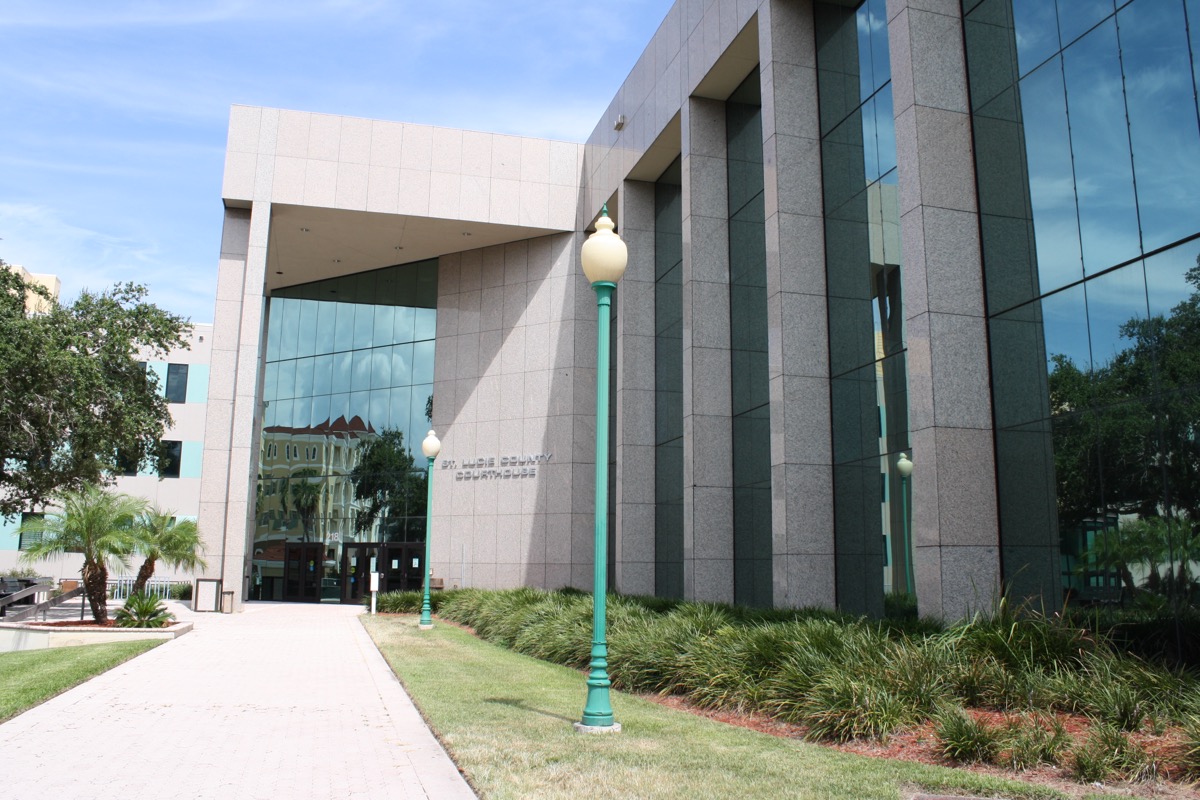
Photo: Georgia Guercio / Wikimedia Commons (CC BY-SA 3.0)Foreclosure cases in St. Lucie County are decided by the Nineteenth Judicial Circuit Court in Fort Pierce, the county seat, with records kept by the St. Lucie County Clerk of the Circuit Court and Comptroller. The Clerk holds foreclosure sales online through RealAuction at stlucie.realforeclose.com, where bidders register and bid electronically rather than in person at the courthouse. Since the court schedules a sale date once a final judgment is entered, reviewing your file with the Clerk's office and confirming your auction date early is the most helpful first step you can take.
St. Lucie County, created in 1905, lies along Florida's Treasure Coast — named for the Spanish treasure fleet that wrecked offshore in 1715 — with its county seat, Fort Pierce, taking its name from a Second Seminole War-era fort.
Official St. Lucie County resources: Clerk of Court · foreclosure auction portal
Yes. Florida is a judicial foreclosure state, so a St. Lucie County mortgage foreclosure goes through the Circuit Court and the sale is conducted by the St. Lucie County Clerk of Courts.
If a St. Lucie County property sells for more than was owed, the surplus is held by the Clerk of Courts. Under Fla. Stat. §45.032 the former owner has priority to claim it — generally within 60 days of the clerk's notice. You file a claim with the St. Lucie County Clerk with proof of prior ownership.
In most cases yes — you can sell any time before the foreclosure auction, and a sale that pays off the debt stops the foreclosure. We'll help you understand the St. Lucie County timeline.
It costs nothing and commits you to nothing. A real person reviews your situation and lays out every option available to you in St. Lucie County — made for your exact situation.
💡 Free official help: Reach a HUD-approved housing counselor near Fort Pierce at no cost — 1-800-569-4287 or the CFPB counselor finder. St. Lucie County foreclosure & tax-deed sales are administered by the St. Lucie County Clerk of Courts. We always point you to these — even though they aren't us.